When people have to use intimidation, manipulation or domination, the relationship is already spoiled or poisoned. It’s a power play of control. Redeeming such a relationship is possible with a wise plan, strongly re-defined boundaries, enduring commitment, and the possibility of a time of separation in order so a modified perspective might be gained.
Willingness and desire to be together, equality between people and complete mutuality are the hallmarks of healthy relationships.
Where any form of strong-arm tactics are used, the relationship has already taken a turn to become something harmful to both the parties.
Each of these relationship-poisons (manipulation, domination and intimidation) can be very subtle, coming in different shapes, sizes, and intensities.
Here are some of the evidences of manipulation, intimidation, and domination in a relationship:
1. The relationship is kept on an unequal footing that one person may keep power over another. In severely controlling relationships both parties may have forgotten there are choices at all.
2. One person tries to get what he or she wants without declaring what is wanted. In attempting to get what the one person wants, both persons are diminished.
3. One person does not see the other as totally free.
 4. One person tries to get what he or she wants through threats or withdrawal.
5. It is expected that every move, thought, and feeling will be reported at least from the less-dominant person to the other. If one person is unwilling to tell all, it is assumed there is something to hide.
6. One person is not free to make plans without consulting or getting permission from the other.
7. One person in the relationship continually evaluates and examines the commitment and love of the other.
8. The dominant person tells the other how they should feel and usually re-scripts any division or disagreement into the appearance of unity.
9. One person feels at liberty to speak for both people and then, is offended when the partner wants to express his or her own views.
10. Desire for self-expression or a distinct voice (by one) is considered betrayal or a lack of trust (by the other).
11. One person expects unilateral support for his or her opinions, choices and desires, declaring somewhat of an attitude which says: If you say you love me then you have to love everything about me, under all conditions, and all of the time.
12. Difference in opinion or having different interests is considered a lack of love, or a lack of respect and commitment.
Simple definitions and a metaphor which might be helpful in considering the three “cancers” of relationships:
Manipulation: playing chess with another person or with people. Maneuvering as if life were an attempt to checkmate others into loving us or doing what we want.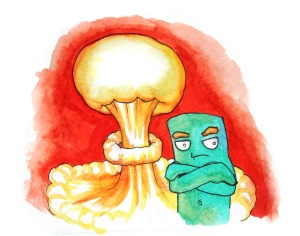
Domination: playing chess with another person or with people as in manipulation. The difference is the dominator has removed the opponent’s pieces without declaring so in the first place.
Intimidation: playing chess with another person or with people where winning and losing comes with either the threat of punishment or actual punishment.
Healthy Relationship: There is no element of either winning or losing; it is not a game. It is free of tactics, ploys, moves, and agendas.

 “Amicable divorce” is possible when mutually desired. Even then, it is tough. You want war without casualties. Hurt is inevitable and inescapable. Your relationships with your adult children, if sound, will weather any storm. Speak your truth to your wife AND your adult children.
 difficultrelationships.com